
个人简介
刘洋 | 个人网站
广东 | 深圳
当前状态:在校/应届生
个人简介
广东 | 深圳
当前状态:在校/应届生
快速了解我
中国科学院深圳先进技术研究院 | 联合培养 | 2025~至今
东南大学 | 硕士在读 | 2024~2027
中南林业科技大学 | 学士 | 2020~2024
科研数量
2
项目数量
5
博客文章
7

GDP-Net: Global Dependency-Enhanced Dual-Domain Parallel Network for Ring Artifact Removal
In Computed Tomography (CT) imaging, the ring artifacts caused by the inconsistent detector response can significantly degrade the reconstructed images, having negative impacts on the subsequent applications. The new generation of CT systems based on photon-counting detectors are affected by ring artifacts more severely. The flexibility and variety of detector responses make it difficult to build a well-defined model to characterize the ring artifacts. In this context, this study proposes the global dependency-enhanced dual-domain parallel neural network for Ring Artifact Removal (RAR). First, based on the fact that the features of ring artifacts are different in Cartesian and Polar coordinates, the parallel architecture is adopted to construct the deep neural network so that it can extract and exploit the latent features from different domains to improve the performance of ring artifact removal. Besides, the ring artifacts are globally relevant whether in Cartesian or Polar coordinate systems, but convolutional neural networks show inherent shortcomings in modeling long-range dependency. To tackle this problem, this study introduces the novel Mamba mechanism to achieve a global receptive field without incurring high computational complexity. It enables effective capture of the long-range dependency, thereby enhancing the model performance in image restoration and artifact reduction. The experiments on the simulated data validate the effectiveness of the dual-domain parallel neural network and the Mamba mechanism, and the results on two unseen real datasets demonstrate the promising performance of the proposed RAR algorithm in eliminating ring artifacts and recovering image details.

NERVE: A Near-Real-Time Three-Dimensional Reconstruction Approach for Interventional Devices and Surrounding Vessels Using a Monoplane C-arm Cone-Beam CT
Real-time three-dimensional (3D) reconstruction of interventional devices, such as stents and embolization coils, together with surrounding vessels, using a monoplane C-arm cone-beam CT (CBCT) has emerged as a critical capability in modern neurovascular interventions. Due to the slow gantry rotation speed of current CBCT systems, real-time 3D recon struction of interventional devices and surrounding vessels has never been accomplished. In this work, we propose a framework for near-real-time 3D reconstruction of interventional devices and vasculature, termed NERVE, which integrates deep structure extraction (DSE) model and deep backprojection filtration (DBF) model together to accomplish 3D reconstruction of interventional devices and vasculature using data acquired at three projection views over a 60◦ angular range. DSE is trained to extract targets from acquired projection data by removing irrelevant anatomical background. DBF is trained to transform direction backpro jection image volumes to final 3D image volumes accordingly. DBF is designed to learn prior regularization that captures the distribution-level characteristics of ideal interventional devices and vasculature to eliminating limited view angle artifacts and high-attenuation-induced artifacts. Extensive numerical simula tions (1000 samples for testing) validate the feasibility and effec tiveness of NERVE. NERVE explicitly leverages subject-specific measured data, ensuring near-real-time 3D reconstruction with high fidelity, potentially facilitating image-guided interventional navigation for patients with neurovascular diseases.

Agentic科研服务平台
经过系统性的工程实施,Research Agent 平台取得了以下可量化的成果: **功能完整性方面:** 平台成功实现了全部 6 种 AI 工作流的端到端运行。QA 工作流可在 30-90 秒内完成从问题输入到带引用答案输出的全流程,每项证据均附带来源论文、段落定位与置信度标注。Compare 工作流支持从 5+ 维度(方法论、实验结果、创新点、局限性、适用场景)进行多论文并行对比,并自动生成标准 BibTeX 导出。Related Work 工作流内建 LLM 自动评判→人类复审→定向修订的闭环,最大修订次数可配置。Compute 工作流完整支持 Python 代码沙箱执行、matplotlib/seaborn 图表生成、pandas 表格分析、Jupyter Notebook 模板执行 4 种计算模式。所有工作流均支持可选的 Judge 质量评判与完整的 Trace 执行追踪。 **架构灵活性与可扩展性方面:** Provider Mode 系统被证明是一个关键的架构决策。通过 `mock / real / hybrid` 三级抽象,开发人员可以在不配置任何外部 API 密钥的情况下完整运行和调试全部工作流;切换到 real 模式时可以无缝接入 OpenAI、Azure、火山引擎等任意 OpenAI 兼容 API;hybrid 模式提供了真实调用失败时的优雅降级。18 个第三方集成的标准化接口设计使得添加新的学术搜索引擎或 LLM 提供商仅需实现对应的 Provider 接口,无需修改任何核心工作流代码。 **协作与知识管理方面:** 平台实现了完整的研究团队协作功能——三级角色权限(OWNER/EDITOR/VIEWER)的项目成员管理、论文库的收藏与笔记标签系统、基于论文或主题自动生成结构化 Wiki 条目的知识沉淀机制、以及任务完成/失败/项目共享等事件驱动的通知系统。这使得一个实验室的集体知识不再分散在各成员的本地工具中,而是统一沉淀在平台的知识库内。 **可观测性与质量保障方面:** 三层 Trace 系统实现了对每次工作流执行的完整记录——包含每个图节点的输入输出摘要、每个工具调用的参数与返回值、LLM 调用的模型/Token/费用、Judge 评判的各维度评分等。Trace 查看器提供了从任务创建到最终答案的全链路时间线回放。Eval Runner 支持对不同模型变体和 Prompt 变体进行系统性的 A/B 对比评测,为 Prompt 优化和模型选型提供了数据驱动的决策依据。 **工程交付物方面:** 项目产出包括:约 220+ Python 源文件、80+ Java 源文件、60+ TypeScript/TSX 源文件、6 个 Flyway 数据库迁移脚本、5 份完整的技术文档(总计约 11 万字)、GitHub Actions CI/CD 流水线、以及 Docker Compose 一键部署配置。平台在 mock 模式下可实现"零外部依赖"的完整本地运行,在 real 模式下支持从开发环境到生产环境的平滑迁移。
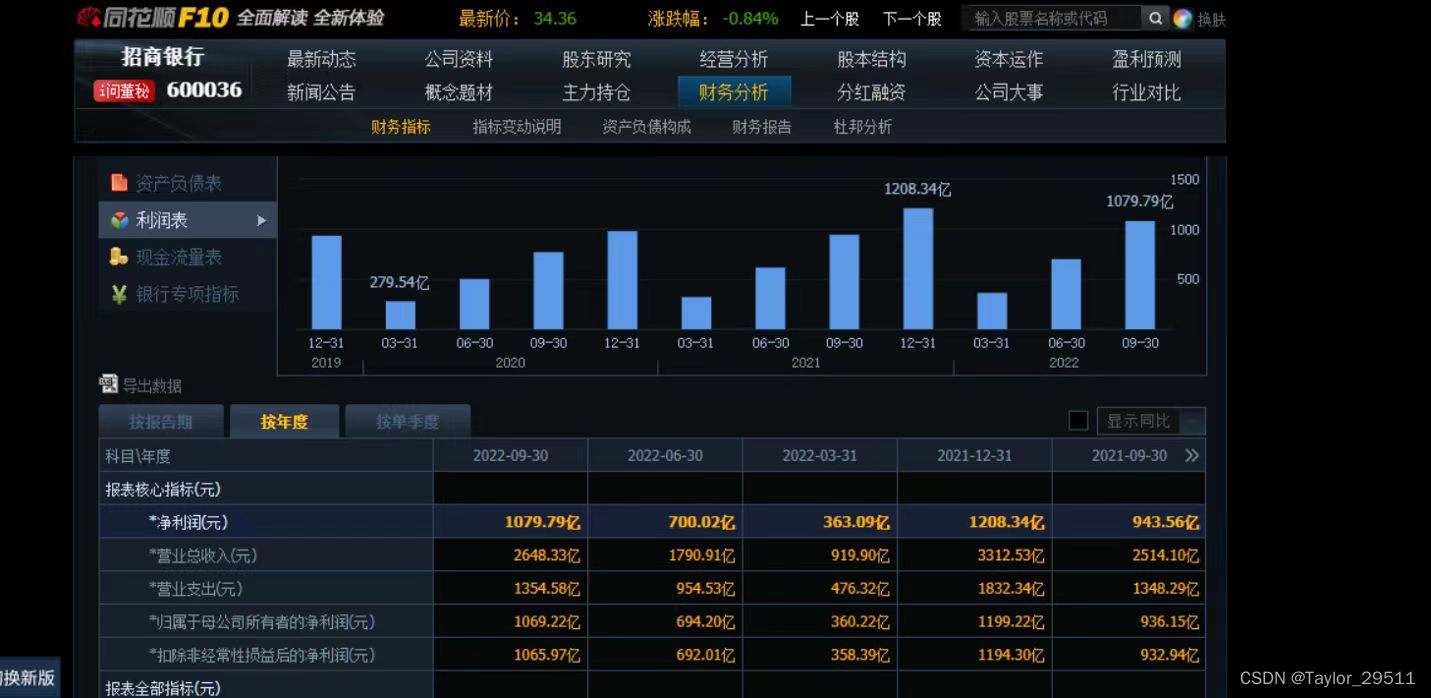
智能股票分析Agent
经过这一轮工程化改造,系统最终形成了完整的“训练—评估—在线分析”闭环,核心链路都具备了标准化入口、统一治理机制和可追踪输出。 从线上运行结果来看,系统在一次典型分析任务中可在 188.45 秒内完成 6 个智能体协作和 5 次模型交互,且工具失败率、无效输出率、报告空白率均为 0;在另一组更高耗时的执行配置下,虽然总耗时上升,但整体失败率依然保持为 0,说明系统已经具备在稳定性不下降的前提下继续优化执行策略的空间。 更重要的是,训练与评估入口在引入数据契约之后,能够在问题数据进入模型前就完成拦截并给出明确反馈,显著提升了结果可信度;而统一日志、质量指标和持续集成基线的建立,也让系统从“功能堆叠”走向“可治理的工程系统”,为后续迭代和规模化应用打下了基础。

在线点单平台
下单链路在高峰场景下更平稳,主流程从同步强依赖转为异步削峰,系统吞吐与响应稳定性显著提升。 库存扣减与提交幂等机制落地后,超卖和重复下单风险得到有效控制,交易一致性增强。 订单分表与全局 ID 方案提升了数据增长下的查询与写入可扩展性,为后续业务扩容预留空间。 缓存治理体系显著降低数据库热点压力,并在高并发下保持较好的可用性与一致性。 统一化基础能力与自动填充机制提升了研发效率;WebSocket 实时提醒增强了商家端订单处理时效。